A quick note: this article is general information, not personal advice. Tax and accounting rules change and everyone's situation is different, so please don't act on anything here without checking how it applies to you. We'd be happy to help — get in touch before making any decisions.
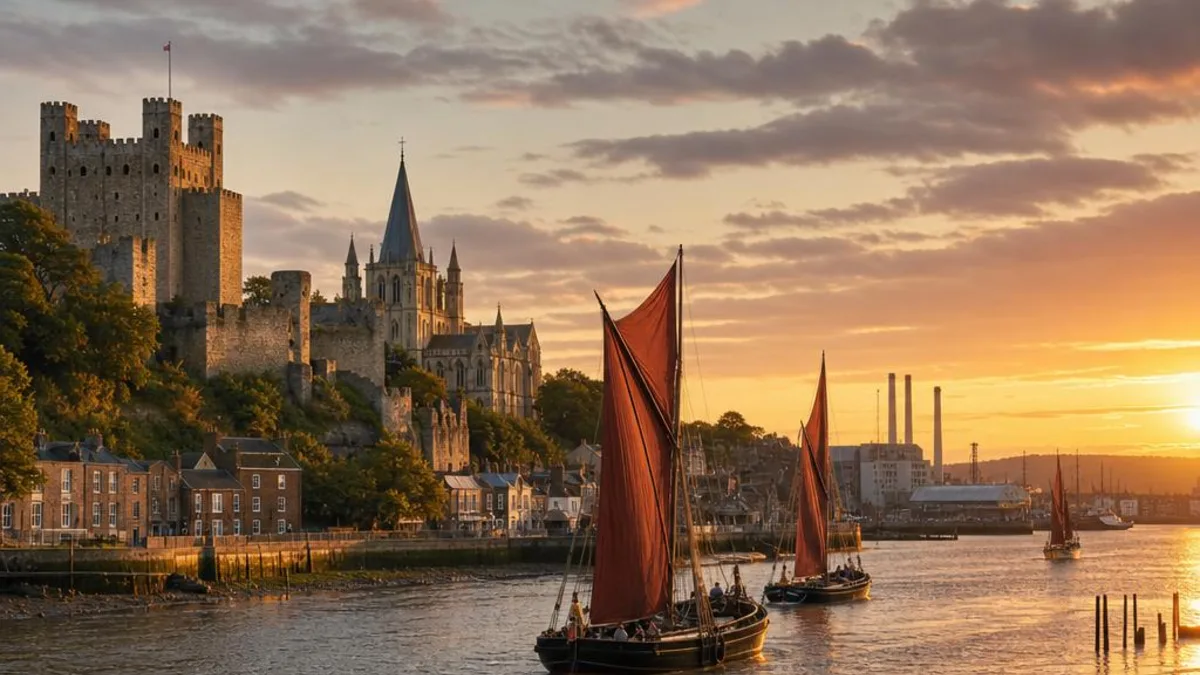
Stand on Rochester Bridge and look downstream. On one bank, the Norman castle and cathedral that made Rochester a centre of trade in the Middle Ages. On the other, the cranes and units of the Medway City Estate on the Frindsbury Peninsula. Between them flows the river that explains both — and almost everything in between. The business history of the Medway towns is, first and last, a history of the river.
Key takeaways
- Rochester's position at the lowest ancient crossing of the River Medway made it a trading town from Roman times, and a chartered city with markets and river tolls through the Middle Ages.
- Chatham Dockyard, founded under Elizabeth I, was for over 400 years the area's dominant employer — building more than 500 ships for the Royal Navy, including HMS Victory.
- In the Victorian era the Medway valley became one of the world's great cement and brick districts, its products shipped to London by fleets of sailing barges from wharves at Strood, Frindsbury, Halling and Burham.
- Short Brothers built seaplanes and flying boats on the Esplanade at Rochester between the wars, making Medway an early centre of British aviation.
- The dockyard's closure in 1984 cost thousands of jobs, but regeneration — Chatham Maritime, the universities, and industrial estates like the Medway City Estate — rebuilt the economy around SMEs, logistics, engineering and services.
- Today's Medway economy is dominated by small and medium-sized firms — the trades, builders, hauliers, manufacturers and professional practices that carry a very old commercial tradition forward.
Rochester: the bridge, the river and medieval trade
The Romans knew the spot as Durobrivae — "the stronghold by the bridges". Watling Street, the great road from Dover to London, crossed the Medway here, and where a major road meets a navigable river, trade follows. Roman Rochester handled corn, pottery, ragstone quarried from the Medway valley (much of Roman London was built with it) and goods moving between the Continent and the capital.
Medieval Rochester grew rich on the same geography. The cathedral, founded in 604, is England's second oldest; the castle guarded the crossing; and the bridge itself was so vital to Kent's commerce that a trust — the Rochester Bridge Trust, founded in 1399 and still going today — was endowed with land to maintain it forever. Markets, fairs, inns and wharves lined the High Street. Oysters from the Medway estuary, fish, timber, wool and grain moved through the port, and the city's charters gave its freemen jealously guarded trading privileges.
Charles Dickens, who grew up in Chatham and returned to live at Gads Hill, filled his novels with the shops, counting-houses and coaching inns of Rochester High Street — a reminder that this was a working commercial town long before it was a heritage attraction.
What was built at Chatham Dockyard?
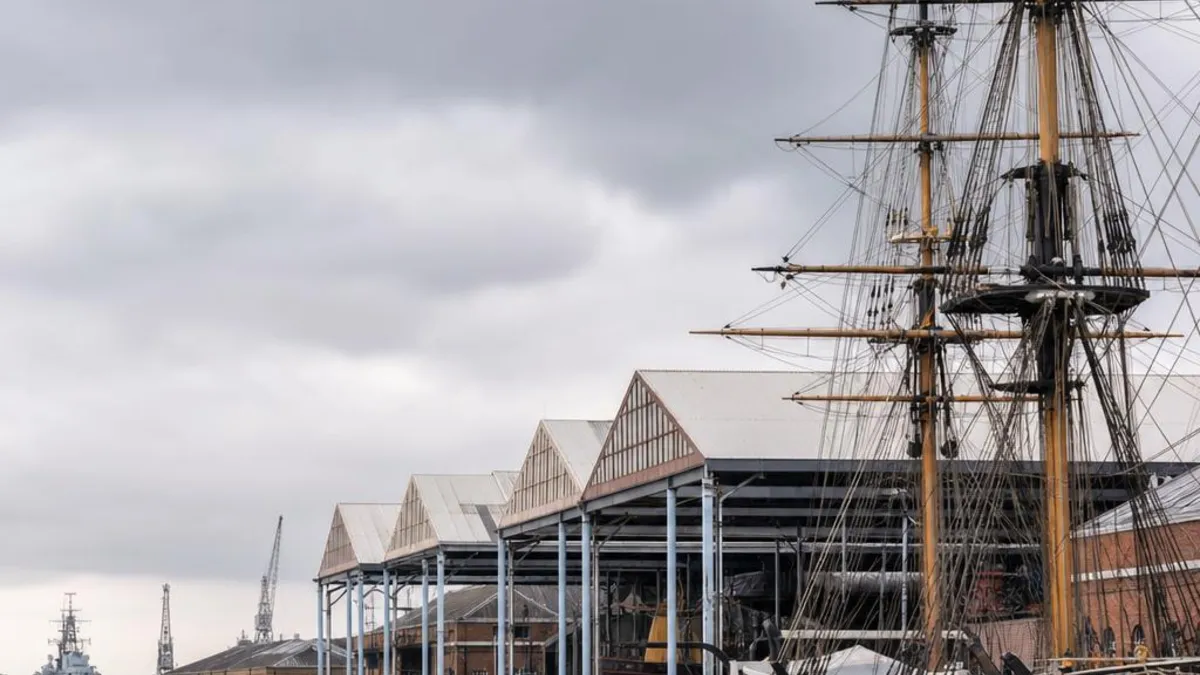
If Rochester was built on trade, Chatham was built on the state's biggest enterprise: the Royal Navy. Ships were first maintained on the Medway in the 1540s, and Elizabeth I established a Royal Dockyard at Chatham in 1567. For the next four centuries it was the engine of the local economy.
The numbers are extraordinary. Over 500 ships were built at Chatham, from Elizabethan galleons to Cold War submarines. HMS Victory, Nelson's flagship at Trafalgar, was launched here in 1765. At its Victorian peak the yard employed some 10,000 people directly — shipwrights, ropemakers, sailmakers, smiths, caulkers and clerks — and sustained thousands more in the towns around it: victuallers, brewers, tailors, publicans and every trade a garrison and dockyard town demands. The Ropery at Chatham, a quarter of a mile long, still makes rope commercially today, more than 400 years on.
The dockyard shaped the towns in subtler ways too. It trained generations of apprentices in engineering and precision trades, creating a skilled workforce that outlasted the yard itself — a legacy modern Medway manufacturers and engineering firms still draw on.
Cement, bricks and barges: the Victorian boom
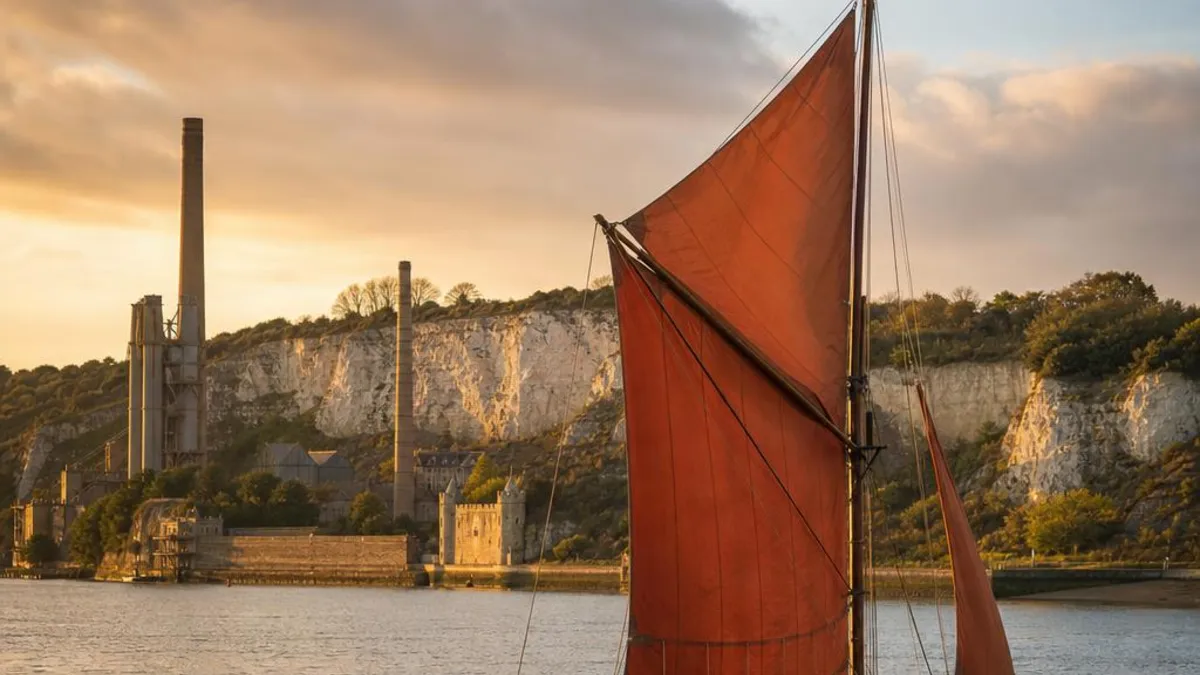
The nineteenth century added a second industrial revolution on the river. The chalk of the North Downs meets the Medway's mud and water here, and that combination — chalk, clay, river transport — made the Medway valley one of the most important cement-producing districts in the world. Portland cement works sprang up at Frindsbury, Strood, Cuxton, Halling, Snodland and Burham; at the industry's height dozens of works lined the river between Rochester and Maidstone, their kilns and chimneys defining the landscape.
Alongside cement came bricks. The brickearth of north Kent fed brickfields across the Medway towns and the Hoo Peninsula, and together the two industries quite literally built Victorian London — carried there by one of the most distinctive commercial fleets Britain ever produced: the Thames sailing barges. Flat-bottomed, red-sailed and crewed by just two men, hundreds of barges worked out of Strood, Frindsbury and Rochester, taking cement and bricks up to the capital and returning with London's refuse to fire the brick kilns. Barge-building yards on the Frindsbury shore — where the Medway City Estate now stands — were busy well into the twentieth century.
Agriculture fed the river trade too. Kent was the Garden of England: hops from the Medway valley went to the London breweries, fruit to the London markets, and paper mills at Snodland and New Hythe turned the valley into a papermaking centre that endured for over a century.
Seaplanes on the Esplanade: Short Brothers in Rochester
In 1913 the Short brothers — the world's first aircraft manufacturing company — chose Rochester's Esplanade for a seaplane works, precisely because the Medway offered sheltered water for testing flying boats. Between the wars the Rochester works produced some of the most famous British aircraft of the age: the Short Sunderland flying boat, mainstay of Coastal Command in the Second World War, and the elegant Empire flying boats that carried airmail and passengers across the British Empire in the 1930s.
At its wartime peak Shorts employed thousands in Rochester, and the company seeded a tradition of precision engineering in the towns that persisted long after aircraft production moved to Belfast in the late 1940s. It is a very Medway story: water, skills and enterprise combining to put the towns at the front of a new industry.
1984: the dockyard closes — and Medway reinvents itself
The second half of the twentieth century was harder. The cement industry consolidated and the riverside works closed one by one. The final blow came in 1984, when the Royal Dockyard at Chatham shut after 417 years, taking around 7,000 jobs directly and many more indirectly. For a local economy still organised around the yard, it was a shock comparable to the pit closures elsewhere in Britain.
What followed, though, is one of the more successful regeneration stories in the South East. The historic core of the yard became the Chatham Historic Dockyard museum and a film location known worldwide. St Mary's Island and Chatham Maritime were redeveloped for housing, offices and retail. The universities came — a campus at Chatham Maritime now hosts several institutions — bringing students, research and graduate talent. And the former industrial riverside was rebuilt for a new kind of economy.
What businesses are on the Medway City Estate today?
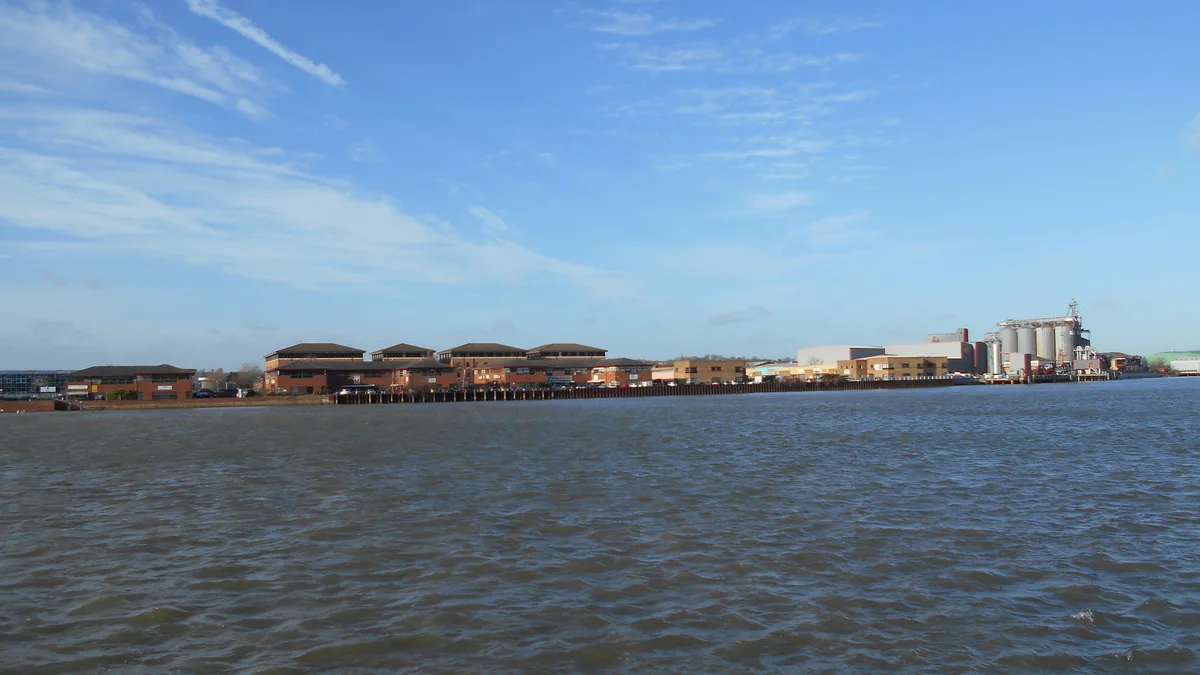
Nowhere shows that shift better than the Medway City Estate. Laid out from the late 1980s on the Frindsbury Peninsula — reclaimed land where barge yards, cement works and a whaling dock once stood — it has grown into one of the largest industrial estates in the South East, home to hundreds of businesses: manufacturers, engineers, vehicle specialists, builders' merchants, food producers, logistics and distribution firms, trade counters and creative studios. It is, in effect, the dockyard's economic successor: not one giant employer, but hundreds of small and medium-sized ones.
That pattern holds across modern Medway and Kent. The overwhelming majority of the area's businesses are SMEs — owner-managed companies, family firms, contractors and sole traders — working in construction, logistics (the M2 and High Speed 1 have made north Kent a distribution corridor), engineering, healthcare, education, tourism and professional services. Rochester High Street's independent shops, Strood's retail and trade parks, Chatham's town-centre regeneration and the business parks at Gillingham and along the A228 all tell the same story: the age of the single dominant employer is over, and the towns' prosperity now rests on thousands of smaller enterprises.
Medway business today: at a glance
- Around 280,000 people live in the Medway unitary authority area — one of the largest urban areas in the South East outside London.
- More than 11,000 businesses are based in Medway, the overwhelming majority of them small and medium-sized enterprises (Medway Council business support lists the local programmes available to them).
- Key sectors include construction, logistics and distribution, engineering and manufacturing, retail, healthcare, education and professional services.
- Connectivity keeps improving: the M2/A2 corridor, High Speed 1 from Strood, Rochester and Chatham, and proximity to the Channel ports and London markets.
- The tax landscape these firms operate in changes every year — our guide to the 2026/27 business tax changes covers what's current.
What history teaches Medway businesses today
Two thousand years of Medway commerce suggest a few durable lessons. Location still matters — the towns thrive when they exploit their position between London, the Channel ports and the Kent hinterland, just as the Roman traders and barge skippers did. Skills outlast industries — the dockyard closed, but the engineering tradition it built still underpins local manufacturing. And adaptability is everything: Rochester's merchants, Frindsbury's barge builders and Chatham's shipwrights all had to reinvent themselves, and their successors on the industrial estates are doing the same with e-commerce, digital services and clean technology.
We see that adaptability every day. Professional Trust Group is based in Rochester, and our clients are the modern chapter of this story — businesses on the Medway City Estate, trades and contractors in Strood and Chatham, landlords and independent shops in Rochester, and owner-managed firms across Kent. The industries change; the need for sound numbers, sensible tax planning and someone in your corner does not.
This article is part of our Kent business history series — you can also read the stories of Gillingham, Maidstone and the Hoo Peninsula.
If you run a business anywhere in the Medway towns — or you're thinking of starting one and adding your own line to this very long story — book a free intro consultation and let's talk about where your business goes next.